December 2026
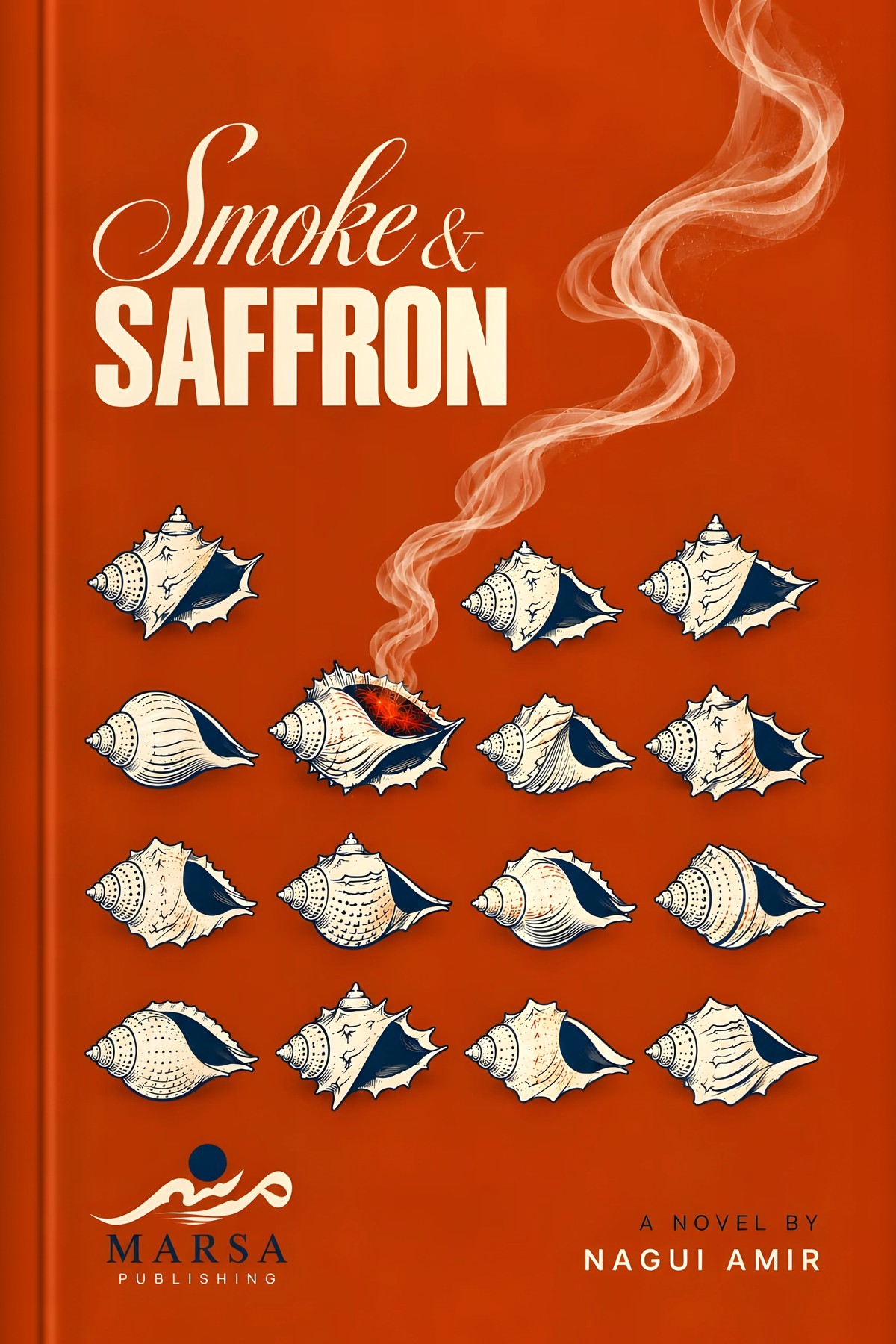
Smoke and Saffron
Historical fiction · Romantic comedy
A shipwreck, a borrowed name, and a city that smells of soap and smoke and oranges.
Coming December 2026
Paperback and eBook, published December 2026.
- Author
- Nagui Amir
- Category
- Fiction
- Genre
- Historical fiction · Romantic comedy
- Publishing
- December 2026
- Formats
- Paperback · eBook
- ISBN
- 978-989-49193-5-3
About the book
There is a reef off Sidon that the fishermen call the Grandmother, because she is old and patient and has taken more men than anyone can count. On the second night of a storm she takes the Mabruka, and in the morning she gives Wardah back: face down on a black rock beneath the Sea Castle, with salt in her mouth and her hands still shaped around a cask.
Her brother Sabri was last seen lashed to a broken spar, grinning at the wave that came for him. A fisherman swears he saw a young man riding the current south. South is something. South is not paradise.
Alone in an Ottoman port where a girl who speaks little is thought to be ill, Wardah lets her hair be cut, learns to walk as if her father owns the street, and takes a name far too large for her: Qaysar. Within days she is standing by the door of the Emir Laith, young, handsome and lovesick for Sitt Layla, who is mourning a father and a brother and receives no one. The Emir has a new go-between. Layla has a new reason to open her garden gate. And Qaysar has a problem that no amount of silence will fix.
Up the hill, the late Hajj Mansur’s house is already crowded: a chief steward who counts the lemons, an uncle who will not stop talking about grief, a hopeless suitor, and a dervish who walks in and out of palaces with a snake in his basket because nobody has ever told the guards to stop him.
Warm, witty and full of music, Smoke and Saffron is a novel about disguise, devotion and the people the sea decides to return.
From the book